ConnectWise Manage SAML integration
Multi-Factor Authentication (MFA) is an extra layer of security used when logging into websites or apps. Individuals are authenticated through more than one required security and validation procedure that only they know or have access to.
Security Assertion Markup Language (SAML) is a protocol for authenticating to web applications. SAML allows federated apps and organizations to communicate and trust one another’s users.
Workforce Authority by SecureAuth, as a SAML provider, improves the user login experience for ConnectWise users with convenient MFA, and offers a simple SAML solution for adding MFA and single sign-on (SSO) on ConnectWise Manage.
Prerequisites
-
Configured Workforce Authority instance and user account with administrative privileges for Workforce Authority.
-
Configured Workforce Authority LDAP Agent.
For more information, see the Workforce Authority LDAP Agent deployment guide.
-
User account with administrative privileges for ConnectWise Manage.
Workforce Authority SAML configuration as an Identity Provider (IdP)
In this section, you'll add an application for ConnectWise Manage and set the SAML configuration settings. This will be the Identity Provider (IdP) side of the configuration.
-
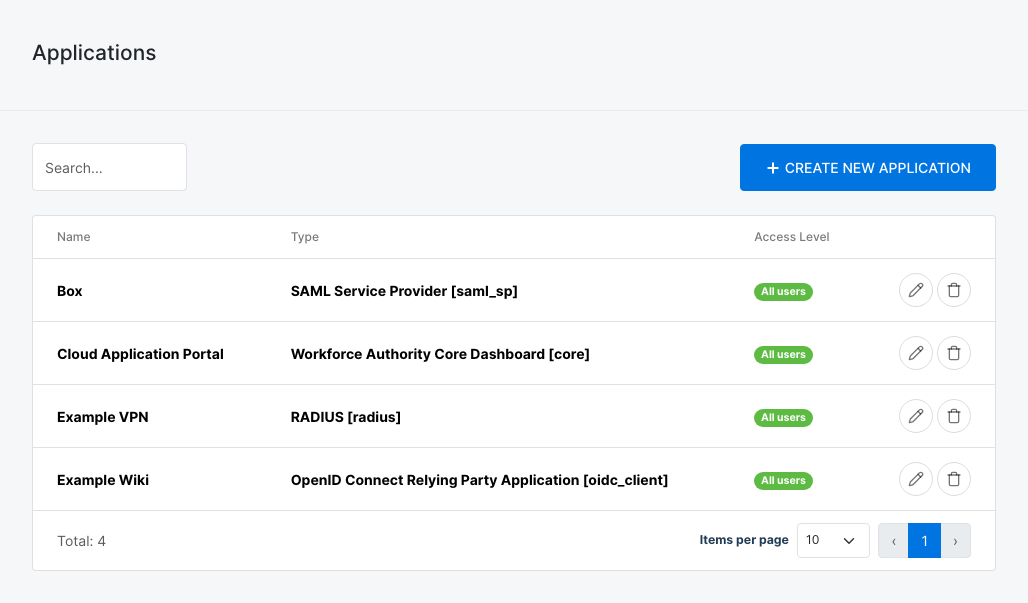
Log in to Workforce Authority with an administrative account and go to Applications.
-
Click Create New Application.
-
In the New Application form, on the General tab, set the following configurations:
Name Set the name of the application. This is the name to display for push notifications, in the Admin panel, Application portal, and audit logs. For example, connectwise. Type Set to SAML Application. Template Set to SAML Service Provider [saml_sp]. Out of Band Methods Select the allowed methods end users can choose to approve MFA requests. For example, Workforce Authority Mobile app (push notifications), SMS, or Security Key. Message for MFA Requests Optional. Type a message displayed to end users when sending an MFA request via push notification, SMS, or email. 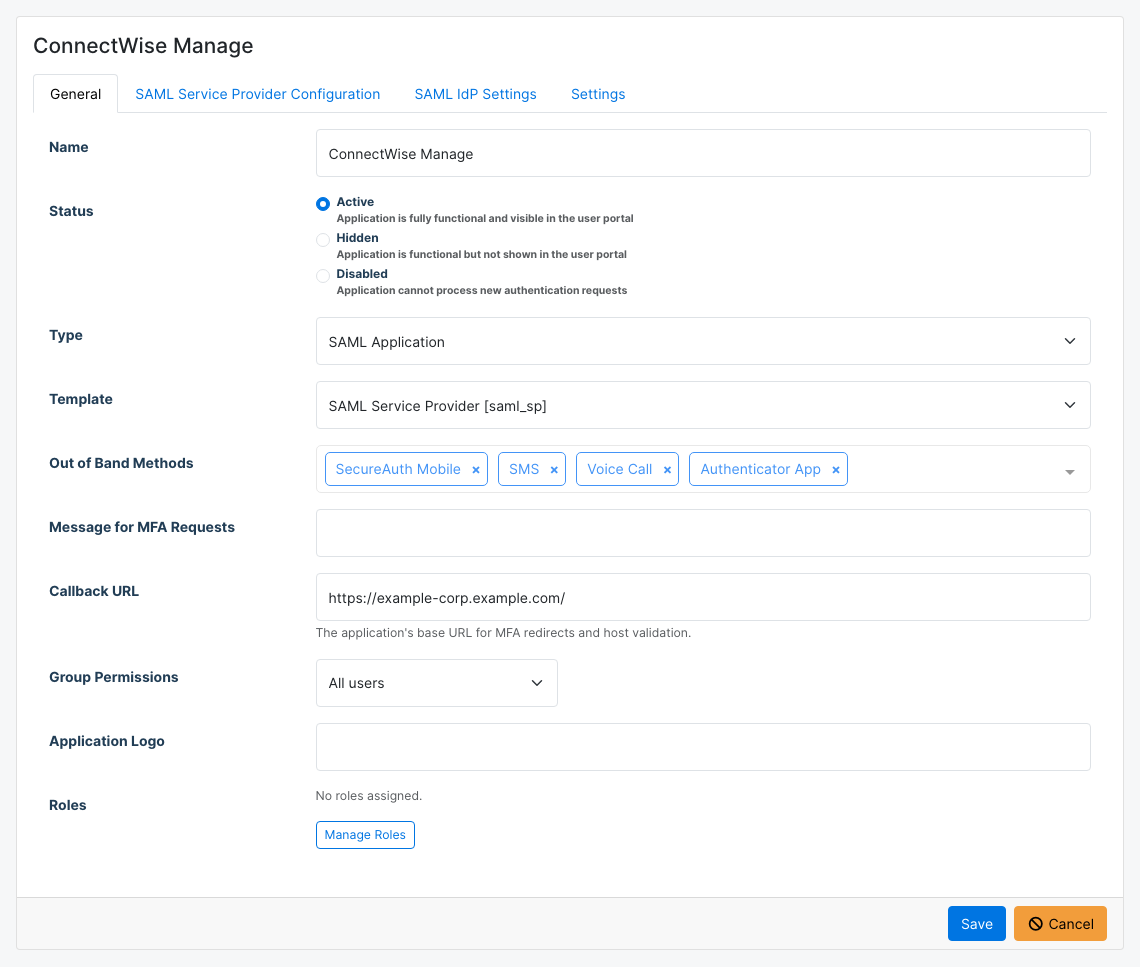
-
Select the SAML Service Provider Configuration tab, and set the following configurations:
Issuer or Entity ID Enter the Issuer/Entity ID of your ConnectWise Manage instance. For example, https://connectwise.example.com.Log in URL Enter the URL used by your users to access ConnectWise Manage. For example, https://connectwise.example.com.Metadata URL Enter the URL containing metadata about your ConnectWise Manage instance. For example, https://connectwise.example.com/{release}/auth/{companyId}/metadata.NameID Format Set to Email Address. Name Identifier Set to mail, the attribute that holds the user's email address.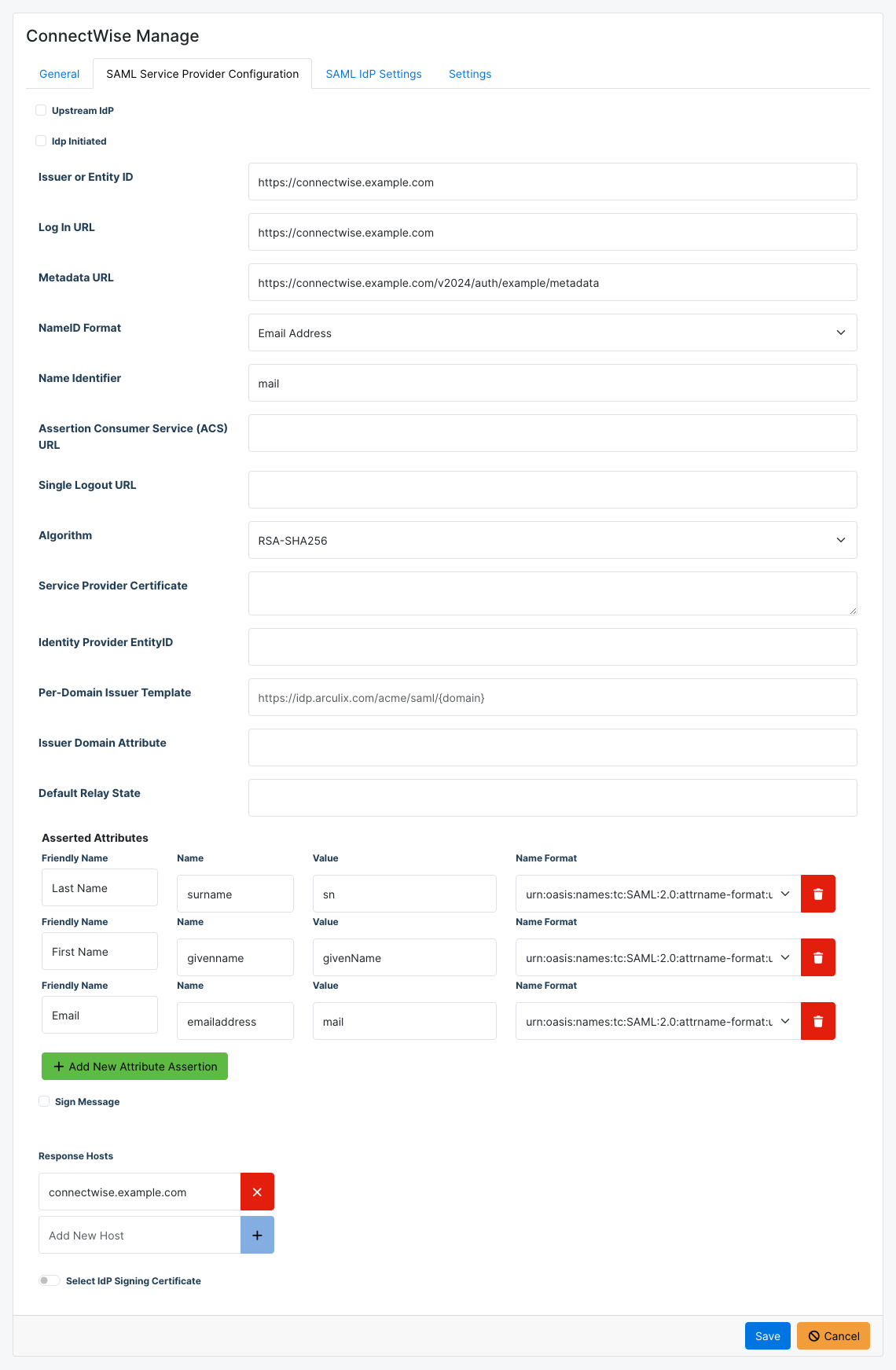
-
Save your changes.
ConnectWise Manage configuration
In this section, you'll configure ConnectWise Manage as a service provider (SP).
-
Download the SAML metadata and certificate for your organization from Workforce Authority.
Metadata download:
https://sso.acceptto.com/<myorganization>/saml/download/metadataView metadata:
https://sso.acceptto.com/<myorganization>/saml/metadataCertificate download:
https://sso.acceptto.com/<myorganization>/saml/download/cert -
Before you begin, ensure that you have an Administrative user in a location that is not subject to the Workforce Authority MFA. This user will allow you to login back to your instance if there are any issues with the configuration.
-
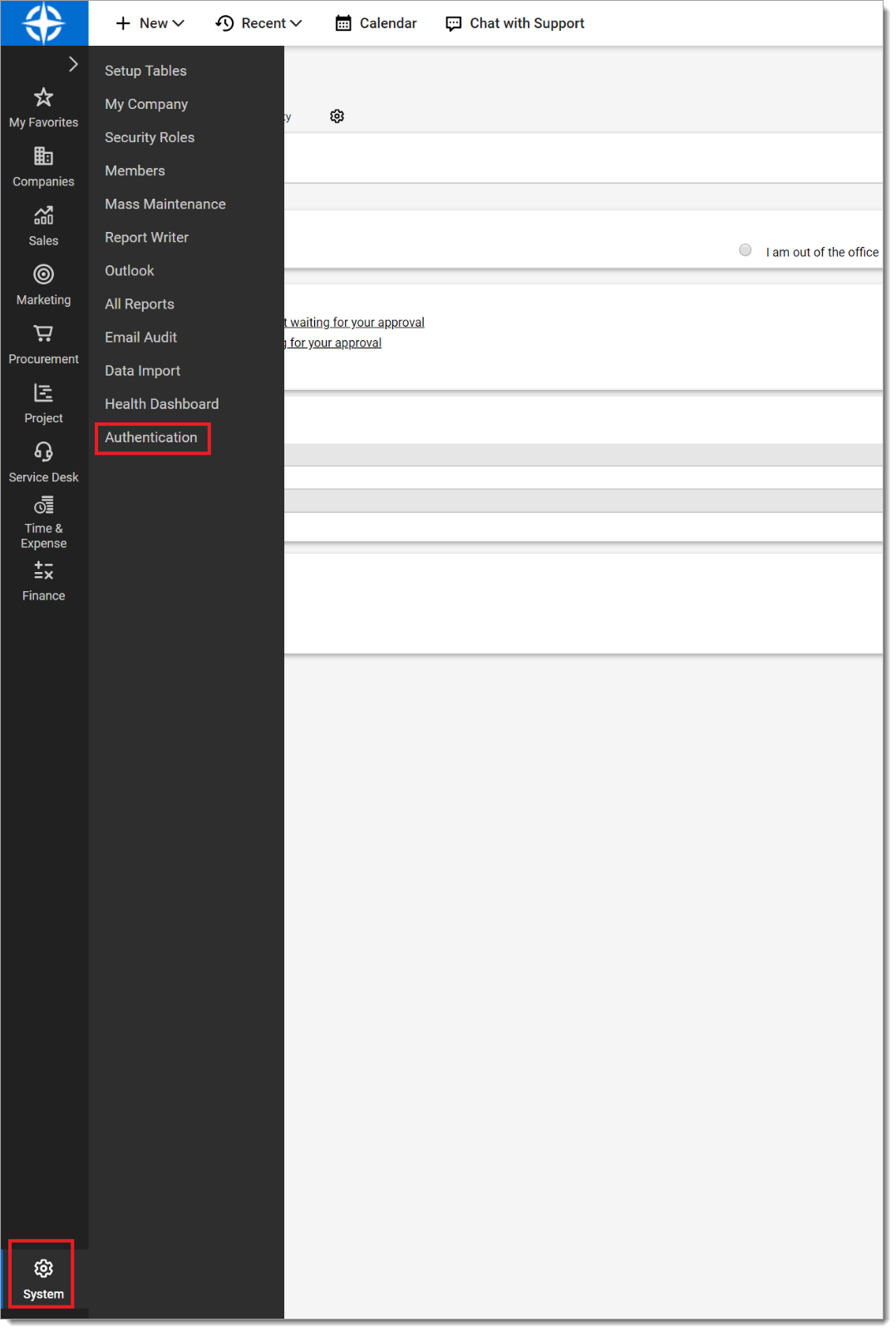
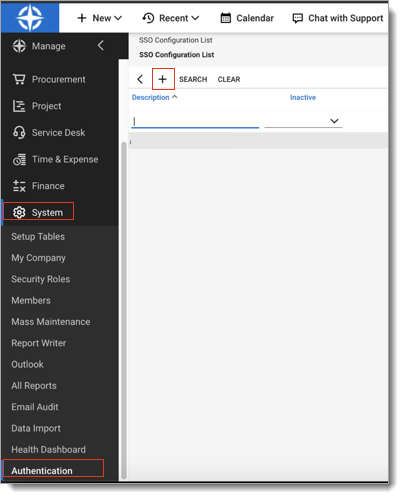
Login to your ConnectWise Manage instance and go to System > Authentication:
-
Select New SSO Configuration by pressing the “+” control. A new SSO provider configuration screen will be shown.
-
In the SSO Configuration section, set the following:
Login URL Enter the Sign-In URL provided in the Workforce Authority metadata. For example, https://saml.example.com/saml/auth.Identity Provider ID Enter the originator of the authentication, in line with the above example. For example, https://saml.example.com/saml).Identity Provider Certificate Upload the X.509 certificate downloaded from Workforce Authority. Location Select the locations where the newly configured IdP will be used. Remember to exclude the location of at least one Admin so that you may regain access to the instance in case there is a misconfiguration. 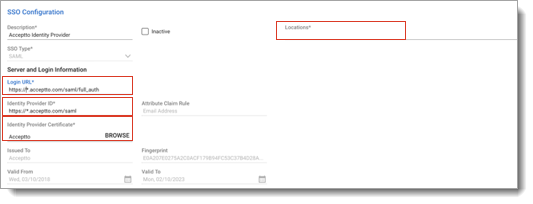
Test your application integration
-
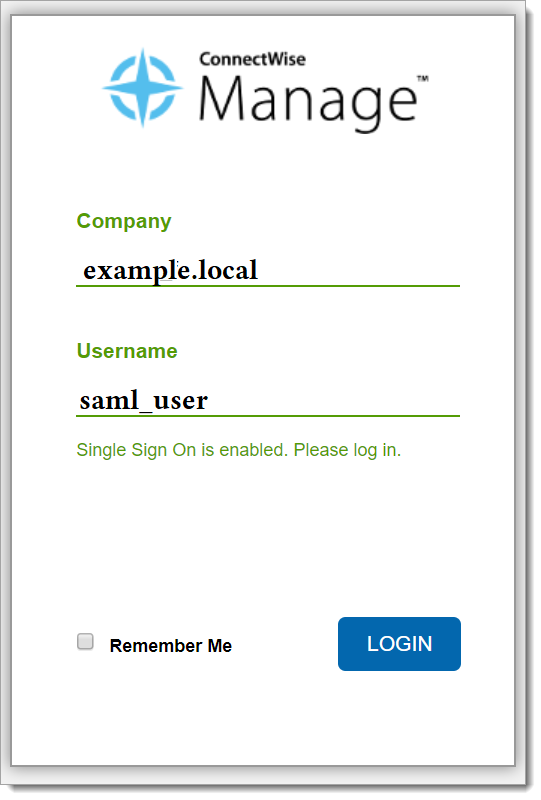
Access your company’s ConnectWise Manage instance and type a username that is in a location that has SAML enabled. Click Login. Please note that the screen changes to display “Single Sign-On is enabled. Please log in.”
-
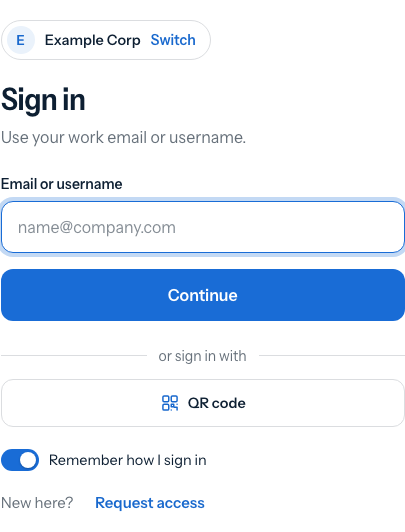
You will be redirected to the Workforce Authority SSO page.
-
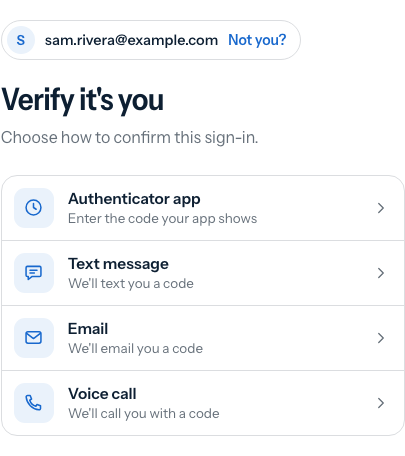
After successful authentication, select your preferred MFA method to approve access to the ConnectWise Manage application.
-
Finally, the user will be redirected to the ConnectWise Manage console.
-
If the login is successful, you can now edit your SAML configuration to add the remaining locations.
In the unlikely case your instance remains inaccessible please contact ConnectWise Support to unlock access to your instance. Contact SecureAuth Support for further assistance with your SAML configuration.
Support
If you have questions or need assistance, contact SecureAuth Support.
Sales
Want to learn more about our MFA solutions? Contact our Professional Services for a demo today.
Disclaimer
All product names, trademarks, and registered trademarks are the property of their respective owners.
All company, product, and service names used in this document are for identification purposes only. The use of these names, trademarks, and brands do not constitute an endorsement by the SecureAuth Corporation.