SAML (SP-initiated) integration
Use this guide as a reference to configure a SAML (SP-initiated) application integration to enable multi-factor authentication (MFA) and single sign-on (SSO) in Workforce Authority.
Multi-Factor Authentication (MFA) is an extra layer of security used when logging into websites or apps. Individuals are authenticated through more than one required security and validation procedure that only they know or have access to.
Security Assertion Markup Language (SAML) is a protocol for authenticating to web applications. SAML allows federated apps and organizations to communicate and trust one another’s users.
This is a general SAML integration guide to help provide configuration details with SAML (SP-initiated) application integrations. For specific integrations, see Integrations, otherwise, you can use this guide for most other integrations.
Prerequisites
-
Configured Workforce Authority instance and user account with administrative privileges for Workforce Authority.
-
Configured Workforce Authority LDAP Agent.
For more information, see the Workforce Authority LDAP Agent deployment guide.
-
Application that supports SAML authentication
-
User account with administrative privileges to a service provider application
-
Access to service provider information about SAML configurations on their side as a service provider
Service provider configuration
In this section, you'll configure your application as a service provider (SP).
-
Download the SAML metadata and certificate for your organization from Workforce Authority.
Metadata download:
https://sso.acceptto.com/<myorganization>/saml/download/metadataView metadata:
https://sso.acceptto.com/<myorganization>/saml/metadataCertificate download:
https://sso.acceptto.com/<myorganization>/saml/download/cert -
Go to your service provider instance and configure the application to use Workforce Authority as SAML authentication.
You will need to have the Workforce Authority metadata on hand and access to the service provider instructions for the SAML configuration.
-
Save your changes in the configurations on the service provider side.
Workforce Authority SAML configuration as an Identity Provider (IdP)
In this section, you'll add an application and set the SAML configuration settings. This will be the Identity Provider (IdP) side of the configuration.
-
Log in to Workforce Authority with an administrative account and go to Applications.
-
Click Create New Application.
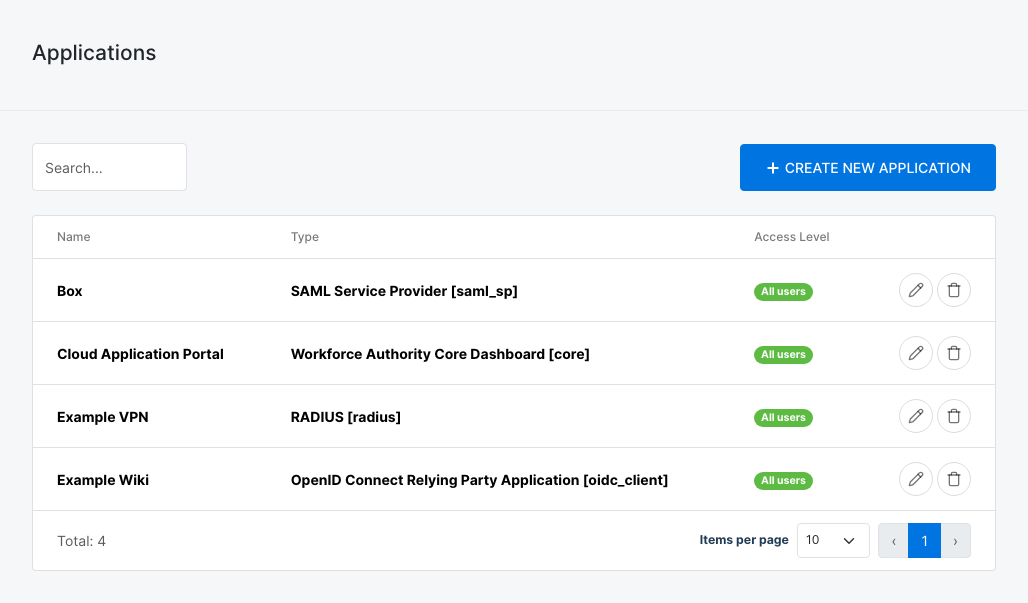
-
In the New Application form, on the General tab, set the following configurations:
Name Set the name of the application. This is the name to display for push notifications, in the Admin panel, Application portal, and audit logs. For example, Acme. Type Set to SAML Application. Template Set to SAML Service Provider [saml_sp]. Out of Band Methods Select the allowed methods end users can choose to approve MFA requests. For example, Workforce Authority Mobile app (push notifications), SMS, or Security Key. Message for MFA Requests Optional. Type a message displayed to end users when sending an MFA request via push notification, SMS, or email. 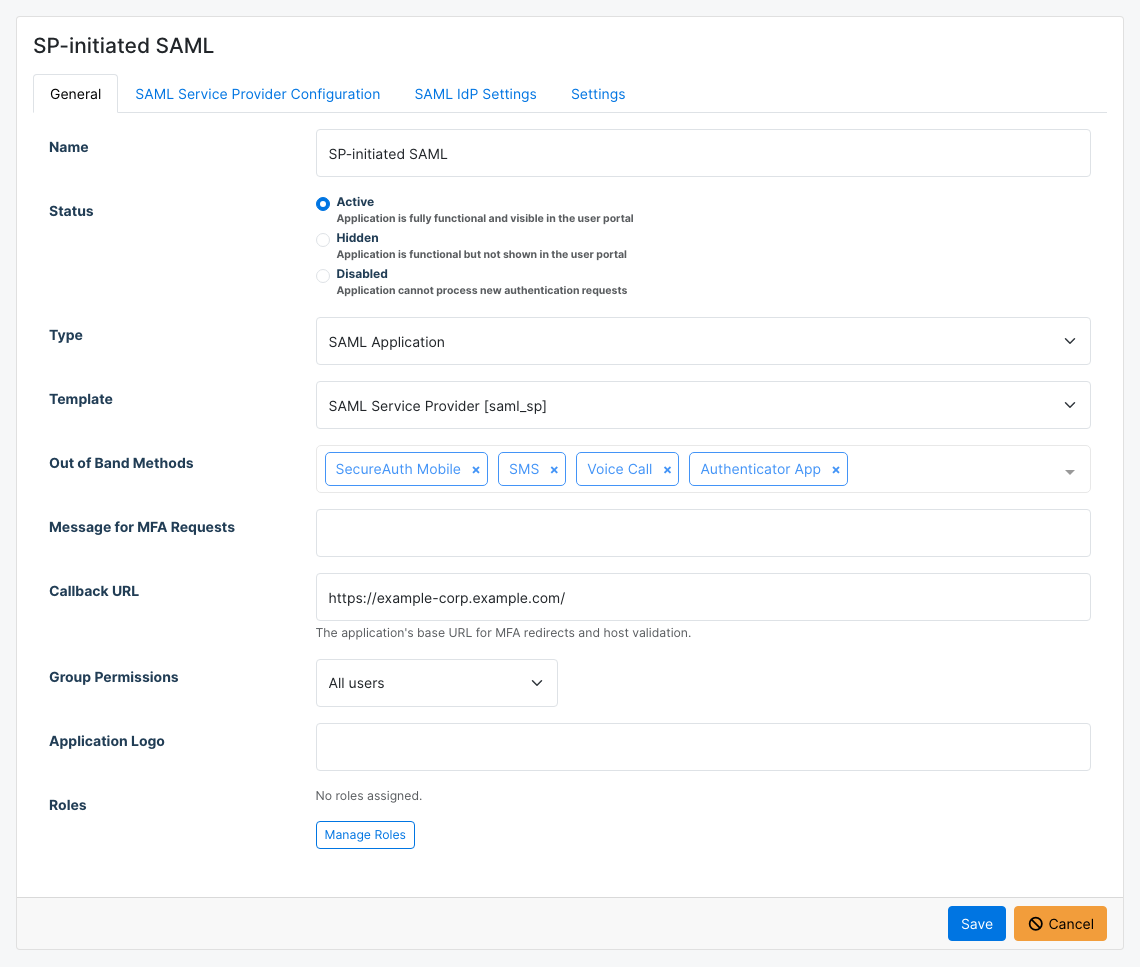
-
Select the SAML Service Provider Configuration tab, and set the following configurations:
Configure as needed, according to the service provider instructions for the application. You might find the applicable information in the service provider metadata to help fill out these fields.
For documentation purposes, all available fields for adding an application are described next.
Upstream IdP This check box is commonly used for integrations with another IdP to and use Workforce Authority as an IdP factor MFA. Issuer or Entity ID Enter the Issuer / Entity ID of your service provider application server or instance. Log in URL Enter the URL for the end user login to service provider application. Metadata URL If applicable, enter the metadata URL provided by the service provider. NameID Format By default, this is set to Email Address. This is the username format in which it asserts the user identity in the SAML application. The most common one is the Email Address. You can change this to different name ID format. Name Identifier By default, this is mail, the attribute that holds the user's email address. You can change it to another attribute.Application Logo Optional. Display the application logo in the SSO portal. The format for this field is the image address. ACS URL The Assertion Consumer Service (ACS) URL is the endpoint of the service provider (SP) where Workforce Authority sends the SAML assertion after successfully authenticating a user. Single Logout URL If applicable, enter the single logout URL for the service provider. When the user logs out, this ensures that it will logout the user from all other authenticated sessions associated with this service provider. Algorithm By default, this is set to RSA-SHA256, which is stronger than RSA-SHA1. Certificate If applicable, paste the certificate information from the service provider. Identity Provider EntityID Optional. This field allows you to customize the IdP Issuer / Entity ID for each application. 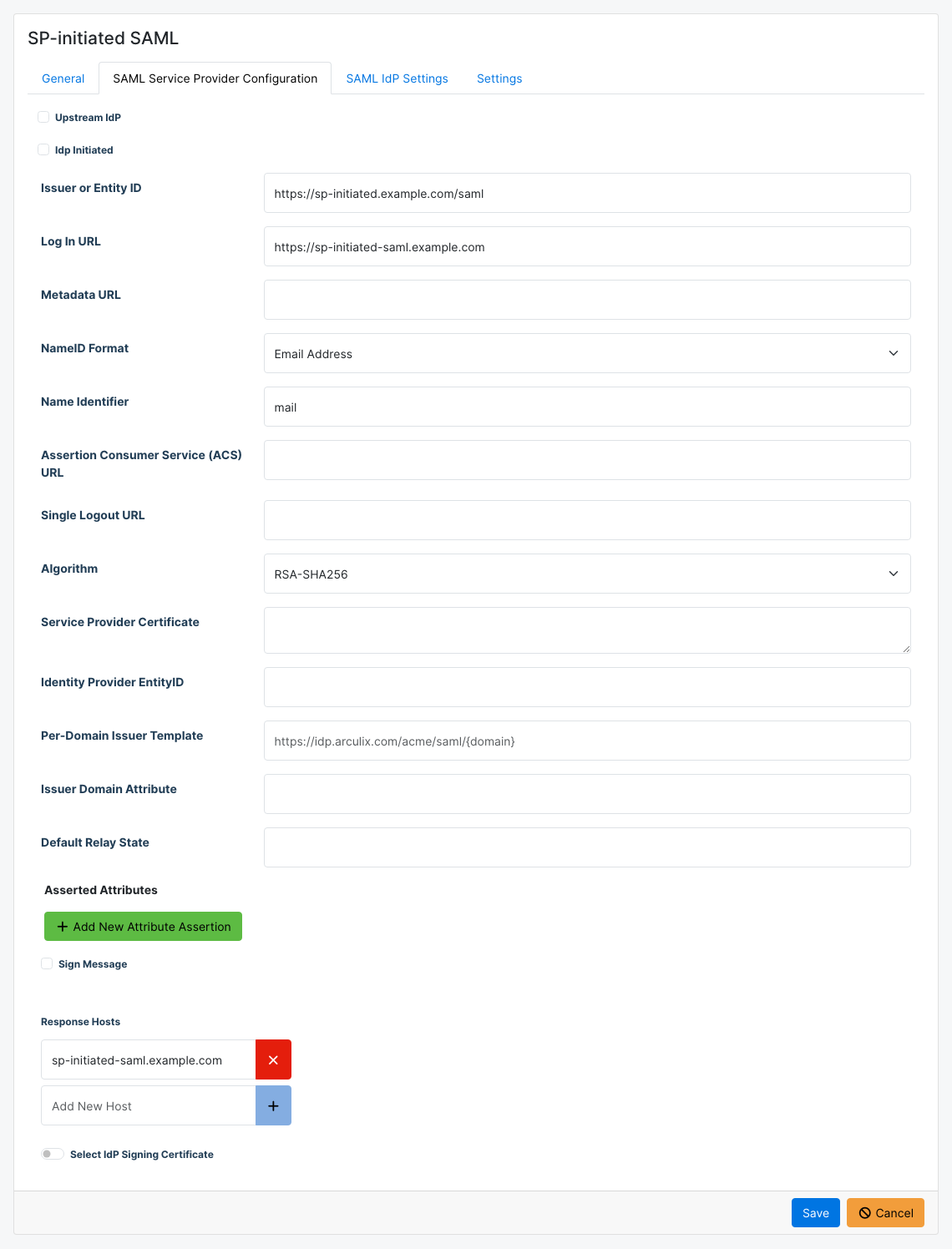
-
If your service provider requires it, you can include Asserted Attributes like the following:
Friendly Name Name Value Name Format Optional. Human-readable form of the attribute's name, which might be useful in cases where the actual Name is complex or opaque. For example, First NameName that the application uses to reference this attribute. For example, FirstNameUser directory attribute used to get this value. For example, givenNameURI reference that represents the Name attribute format provided to your application. For example, unspecified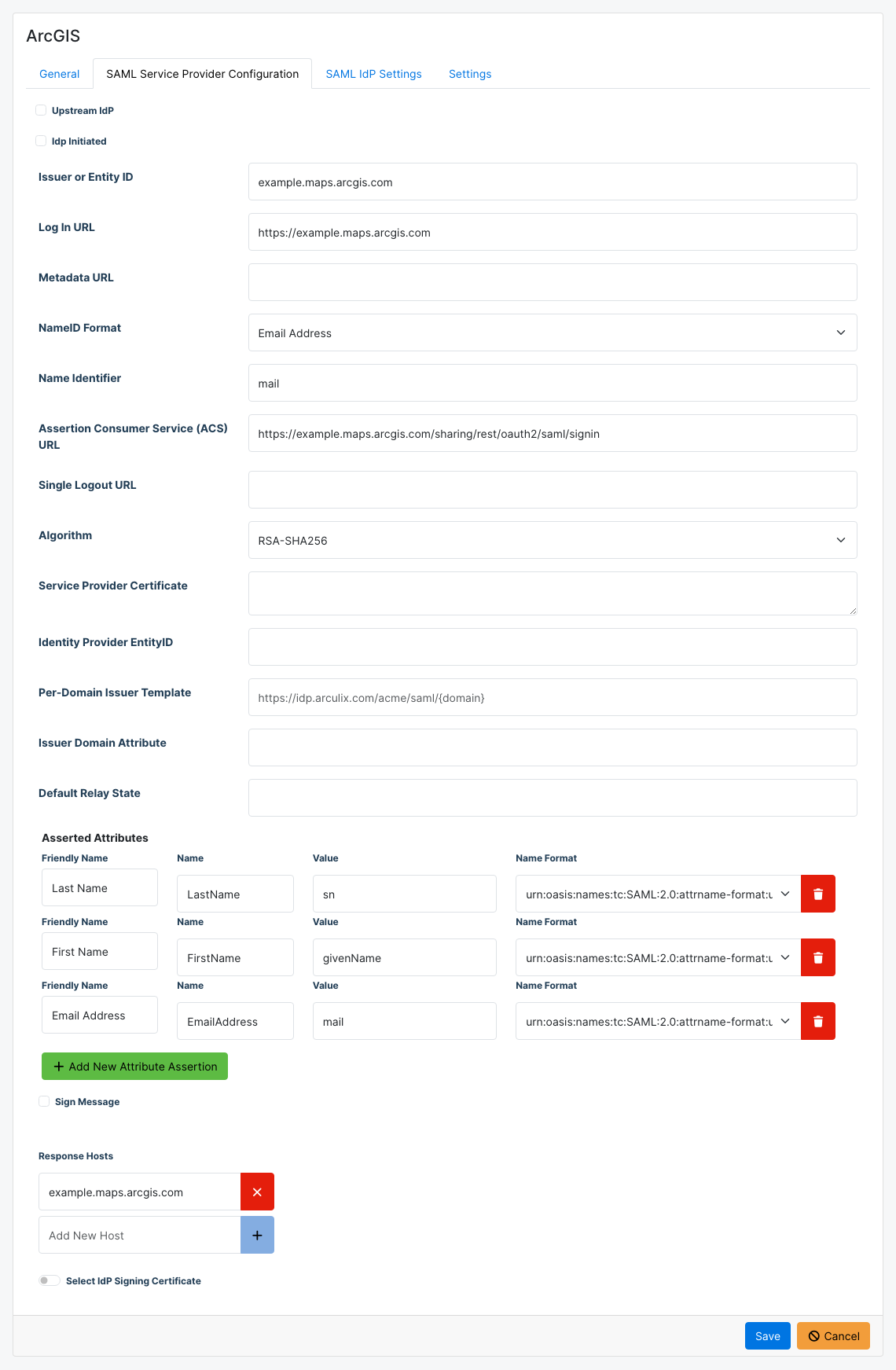
Examples of asserted attributes
-
Save your changes.
Test your application integration
We recommend that you configure a separate URL in addition to the usual authentication URL, to test SAML while leaving the local authentication option available.
-
Test your application integration.
-
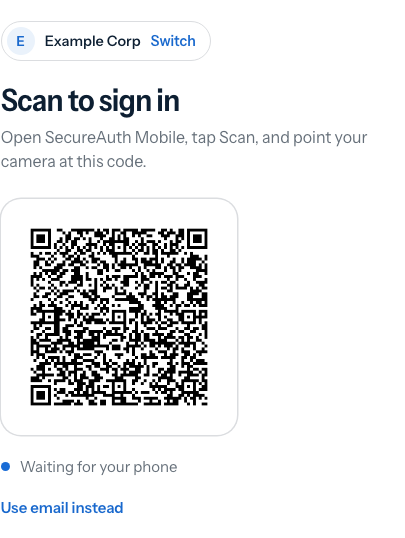
You will be redirected to the Workforce Authority SSO page.
-
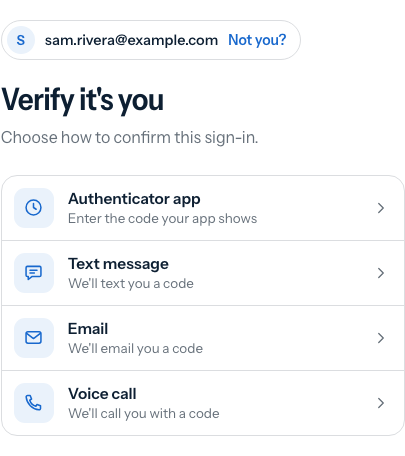
After successful authentication, select your preferred MFA method to approve access to the application.
-
You will be redirected and logged in to the application.
Support
If you have questions or need assistance, contact SecureAuth Support.
Sales
Want to learn more about our MFA solutions? Contact our Professional Services for a demo today.
Disclaimer
All product names, trademarks, and registered trademarks are the property of their respective owners.
All company, product, and service names used in this document are for identification purposes only. The use of these names, trademarks, and brands do not constitute an endorsement by the SecureAuth Corporation.